
Bruxism and Sleep Disorders
Bruxism (teeth grinding and clenching) is often linked to sleep disorders such as sleep apnea. Sleep apnea, a condition in which breathing repeatedly stops during sleep, can increase stress on the body, leading to unconscious grinding of teeth. People with sleep apnea are more likely to suffer from sleep bruxism, as the frequent pauses in breathing and the body’s efforts to reopen the airway can trigger clenching.
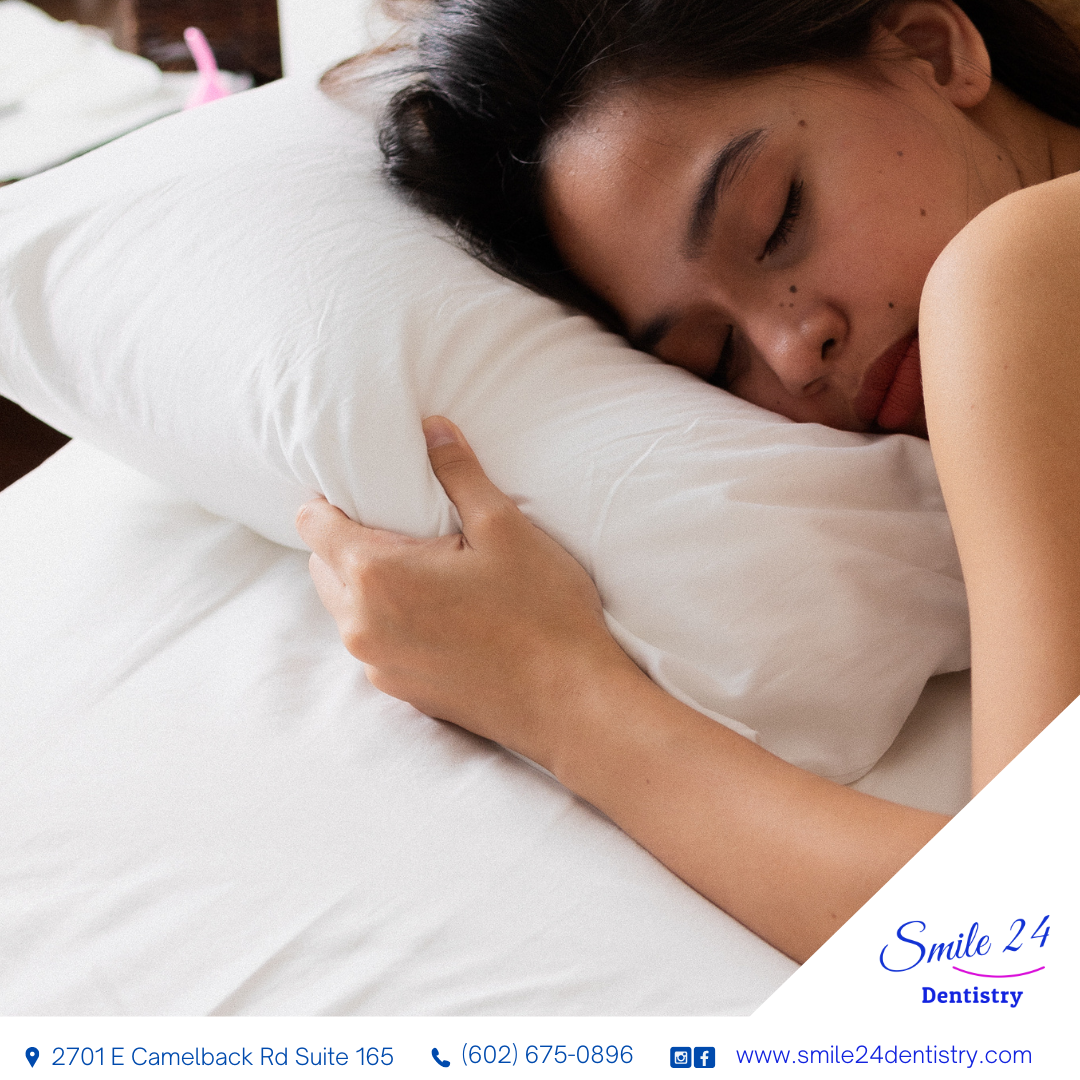
Bruxism and Sleep Disorders
Additionally, sleep issues like poor sleep quality, insomnia, or restlessness can exacerbate bruxism. When sleep is disrupted, the body's muscles, including those of the jaw, may tense up and lead to more frequent grinding. This results in increased jaw pain, tooth damage, and further sleep disturbances, creating a cycle of poor sleep and bruxism symptoms. Managing both conditions simultaneously—often through a combination of nightguards, dental care, and treatment for sleep apnea—can greatly reduce the impact on oral health and sleep quality.
Our dental office Smile 24 Dentistry offers solutions such as custom nightguards for bruxism, which can protect your teeth and improve sleep quality by addressing nighttime grinding.