
Cost and Insurance: Bridge vs. Implant
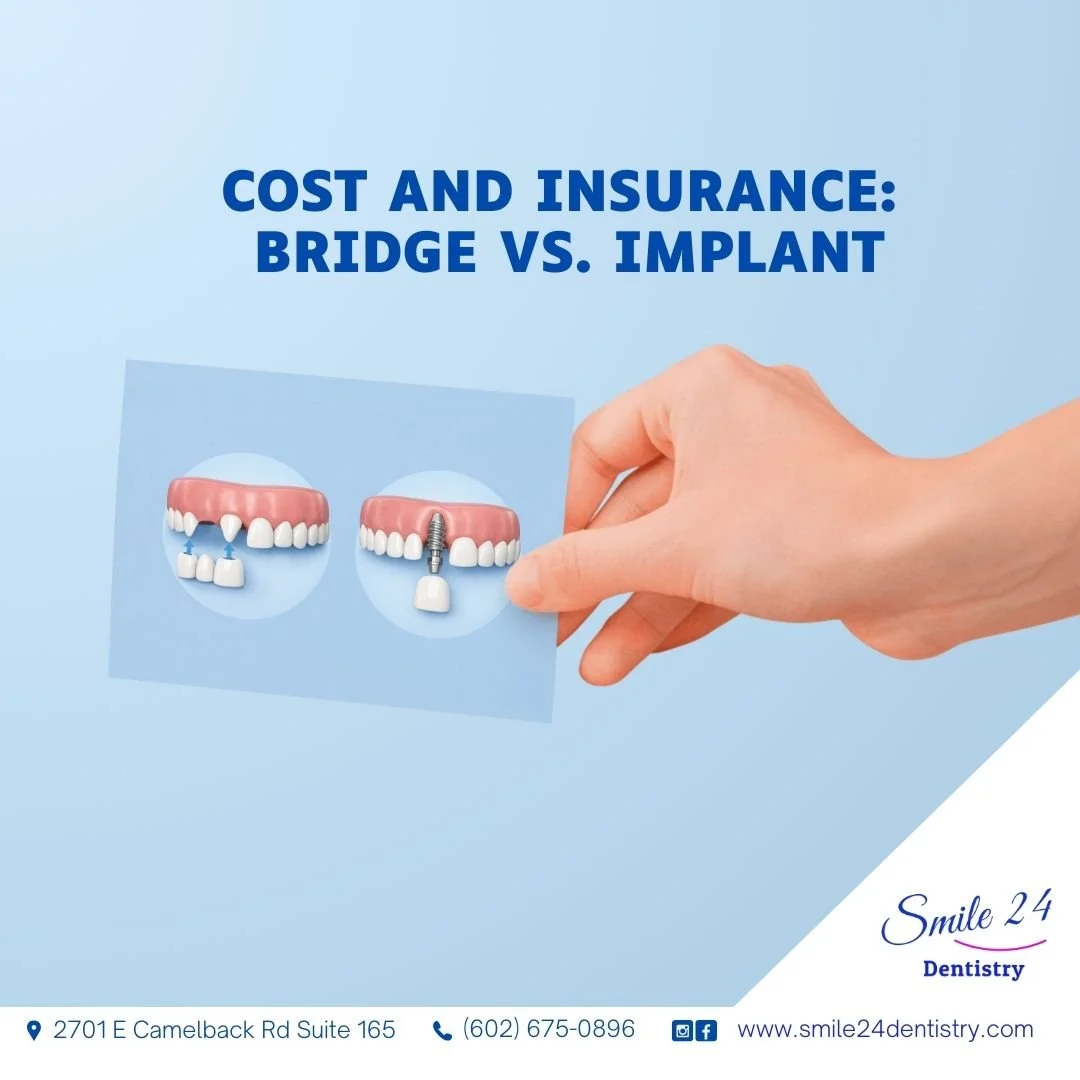
Cost and Insurance: Bridge vs. Implant
Every case is different, but in general:
Bridges: Lower upfront cost; often more coverage from traditional dental insurance because bridges have been around longer and fit familiar benefit structures.
Implants: Higher initial fee; coverage depends on the plan, but more insurers are offering partial benefits for implants or the crown on top.
Most dental plans also include a deductible, coinsurance, and an annual maximum, which all affect what you pay. Your deductible is the amount you pay before insurance starts helping, coinsurance is the percentage you pay after that, and your annual maximum is the total amount the plan will pay for dental care in a benefit year. Once you reach that maximum, you are responsible for 100% of additional costs until the plan resets.
Important cost questions to ask your dentist and insurance:
What is the estimated total cost for each option in my case?
How much will my insurance pay for a bridge vs. an implant and crown?
What maintenance or potential replacement costs should I expect over 10–20 years?
Common Patient Questions:
Is a dental bridge permanent?
Dental bridges are considered a fixed (non-removable) solution, but they are not permanent for life. With normal use, many bridges last a number of years, then may need repair or replacement due to wear, decay under the crowns, or gum changes.
How long does a dental implant last?
With good home care and regular checkups, many implants can last decades and may never need to be replaced. The crown on top may eventually need maintenance or replacement due to normal wear, but the implant itself is designed as a long-term solution.
Does getting an implant hurt more than getting a bridge?
Implant placement is a minor surgical procedure done with local anesthesia, and many patients report it feels similar to or easier than a tooth extraction. A bridge does not require surgery but does involve more work on the adjacent teeth. Your dentist can discuss comfort options for both.
Can I leave the space and do nothing?
Leaving a gap can cause nearby teeth to shift, opposing teeth to over-erupt, and bone in the area to shrink, which can affect your bite and smile long term. Replacing a missing tooth with either a bridge or an implant usually protects your oral health and chewing function.
How to Decide What’s Better for Your Missing Tooth
There is no one “right” answer for every patient. The best way to choose between a dental bridge and a dental implant is to have a thorough exam and consultation that considers:
Your overall health and medical history
The condition of the teeth next to the gap
The amount and quality of jawbone in the area
How quickly you want results
Your budget and insurance coverage
It is often helpful to send a pre‑estimate (pre‑authorization) to your dental insurance, so you can see what each option is expected to cost before you decide on treatment.
A restorative dentist can show you imaging, review pros and cons in your specific case, and help you pick the option that protects both your smile and your long‑term oral health.