
How Bite Problems Can Lead to Jaw Pain
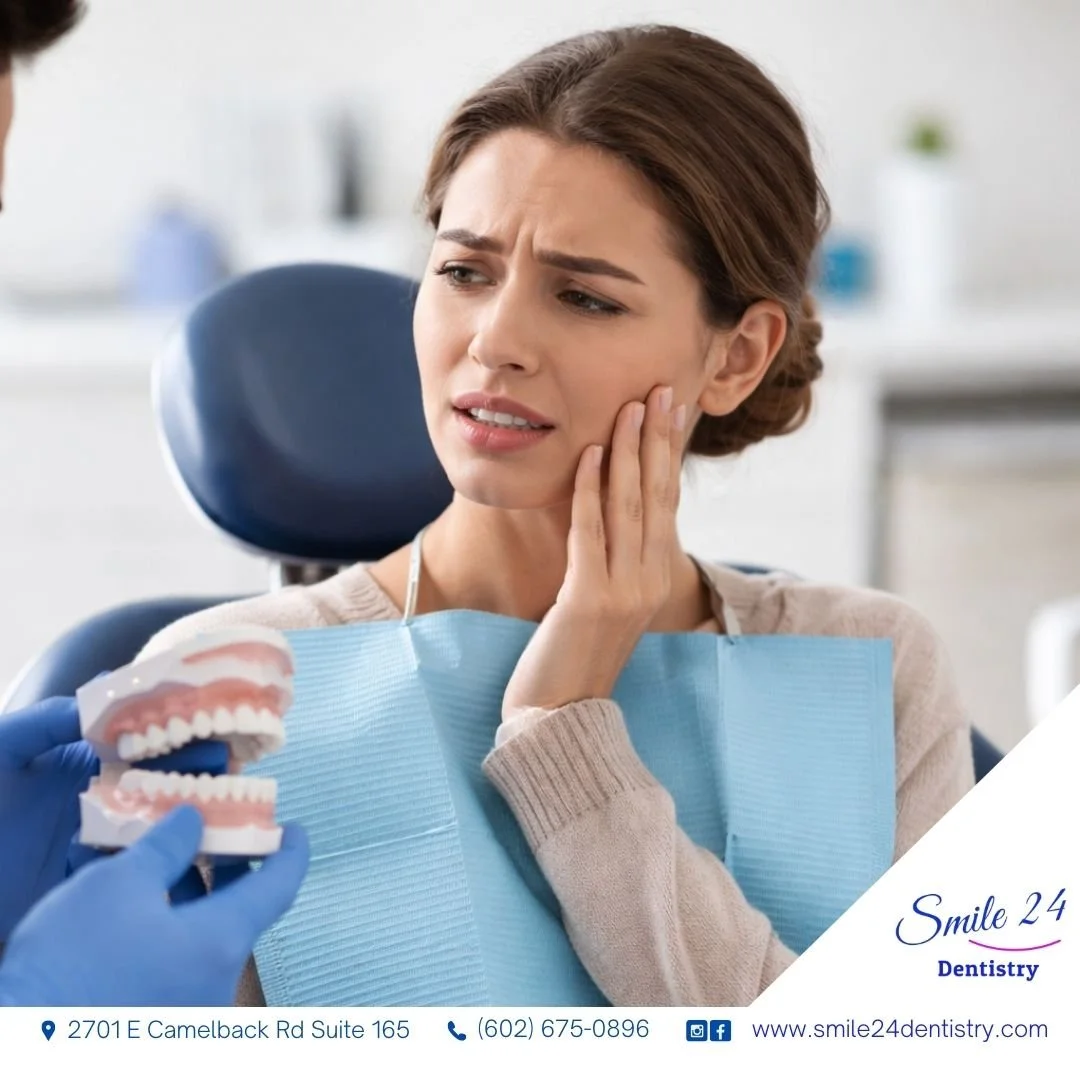
Bite Problems
Bite problems and jaw pain are rarely “just in your head.” In many adults we see, they are the result of how the teeth, muscles, and jaw joints have been working (and often compensating) for years. Restorative dentistry, when done with careful attention to the bite, can rebalance this system and significantly reduce discomfort.
How Bite Problems Can Lead to Jaw Pain
Your bite (occlusion) is the way your upper and lower teeth meet when you close and move your jaw. If certain teeth hit too early, too hard, or not at all, the jaw joints (TMJs) and chewing muscles have to work unevenly.
Common consequences include:
Sore or tight jaw muscles, especially on waking or after long chewing.
Clicking, popping, or locking in the jaw joint.
Headaches, facial pain, and sometimes neck or shoulder tension.
Research shows that malocclusion and TMJ disorders are often associated with pain, limited opening, and reduced quality of life. The goal of restorative dentistry in these cases is to create a bite that shares forces evenly and lets muscles relax.
Step 1: Careful Diagnosis Before Any Restorations
The most important part of treating bite‑related pain is not the filling, crown, or splint—it’s the diagnosis.
A thorough exam typically includes:
Joint and muscle evaluation: palpating jaw muscles, checking joint noises, range of motion, and any locking.
Bite analysis: checking how teeth contact in different positions, sometimes using articulating paper, mounted models, or digital scans.
History: clenching or grinding, past orthodontics, injuries, headaches, and sleep issues.
Evidence‑based guidelines emphasize that any irreversible restorative or orthodontic treatment should be preceded by careful evaluation and control of TMJ symptoms.
How Restorative Dentistry Can Improve Your Bite
Once we understand how your bite and joints are working, restorative dentistry can be used strategically - not just to “fix teeth,” but to rebalance the system.
Occlusal Adjustment (Fine‑Tuning the Bite)
Small high spots on fillings, crowns, or natural enamel can overload a few teeth and the TMJ. Selective reshaping of these contacts (occlusal adjustment) can help create a more even bite and reduce muscle strain.
Done correctly, this is conservative and can:
Eliminate sharp, “zapping” pain on one tooth.
Reduce muscle fatigue and tenderness during chewing.
Protect new restorations from chipping or breaking.
Restoring Worn or Broken Teeth
Chronic grinding (bruxism) often shortens and flattens teeth. When teeth are too worn, the lower jaw may slide to find contact, putting stress on joints and muscles.
Careful restorative work can:
Rebuild worn biting surfaces with onlays, crowns, or composite bonding.
Re‑establish a more stable, repeatable resting position for the jaw.
Improve chewing efficiency and facial support.
The key is to restore teeth in a way that respects the TMJ and muscles, not just how they look.
Full‑Mouth Rehabilitation in Complex Cases
For patients with severe wear, multiple missing teeth, or long‑standing bite collapse, we sometimes design a comprehensive plan (full‑mouth rehabilitation). This can involve a combination of:
Crowns and onlays
Dental implants and implant crowns
Bridges or partial dentures
When planned around the TMJ and occlusion, this type of rehabilitation can significantly improve function and reduce pain—but it must be based on a stable joint and carefully tested bite position.
The Role of Night Guards
Before committing to larger, irreversible treatment, we often recommend custom night guards to help protect your teeth and ease strain on your jaw. A properly made night guard creates a smooth, even surface for your teeth to contact while you sleep.
Night guards can:
Reduce jaw muscle tension and tenderness.
Decrease morning jaw fatigue and clenching‑related discomfort.
Protect teeth and existing restorations from grinding and chipping.
For many patients, using a night guard is a simple, conservative way to control grinding forces, support restorative work, and make everyday chewing more comfortable.
When Restorative Dentistry Can - and Cannot - Solve Jaw Pain
Restorative dentistry can help when:
Bite forces are clearly uneven and linked to symptoms.
There are obvious high spots, broken or poorly fitting restorations.
Teeth are severely worn or missing, forcing the jaw into a strained position.
However, jaw pain is complex. Research shows temporomandibular disorders (TMD) can also involve muscle tension, arthritis, systemic factors, and psychosocial components like stress and poor sleep. In some cases, we work together with:
Physical therapists
Pain specialists or rheumatologists
Sleep physicians (especially when sleep apnea or sleep bruxism is suspected)
The aim is not to “fix everything with one crown,” but to be realistic and honest about what restorative dentistry can achieve.
How to Know If Restorative Care Might Help Your Bite and Jaw Pain
You may be a good candidate for bite‑focused restorative dentistry if you notice:
Pain, fatigue, or tightness in your jaw when chewing or talking.
Frequent chipping, cracking, or breaking of teeth or fillings.
Teeth that no longer seem to touch evenly, or one side of your mouth doing all the work.
Headaches or facial pain that seem to worsen when your jaw is active.
The next step is a detailed evaluation with a dentist who looks at both teeth and joints. Together, you can decide whether conservative bite adjustment, selective restorations, or a staged rehabilitation plan is the safest, most predictable way to reduce pain and protect your smile for the long term.